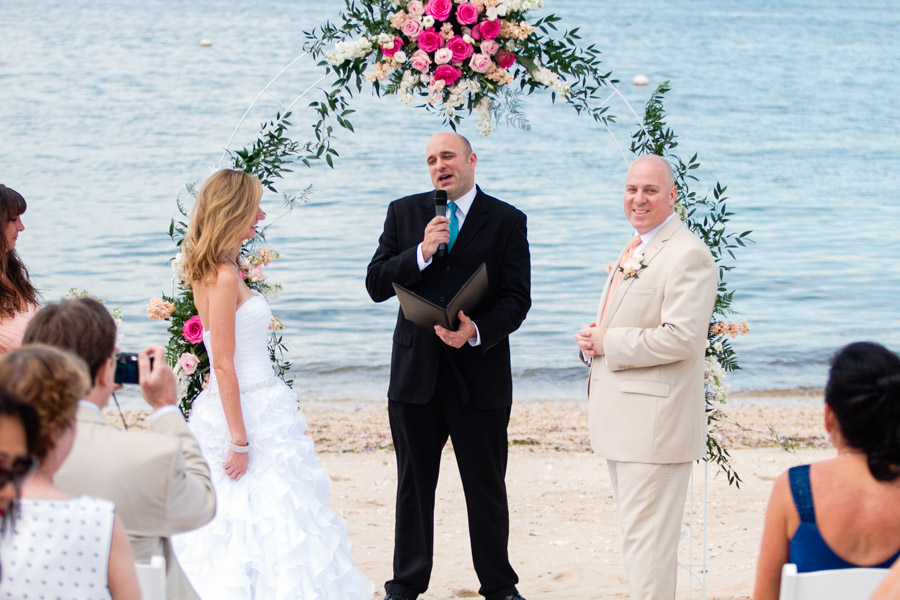
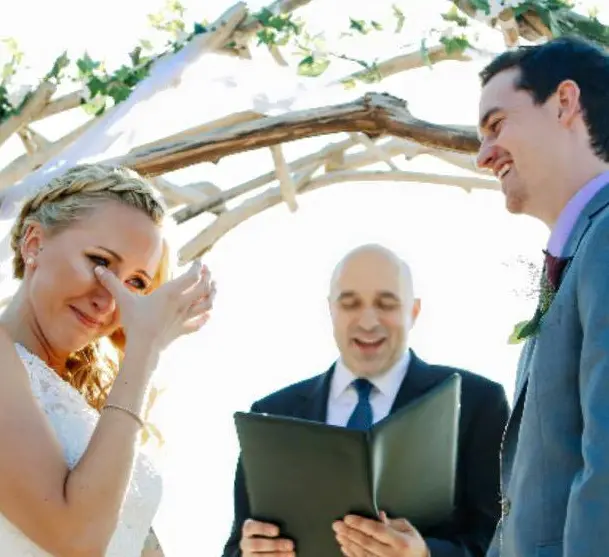

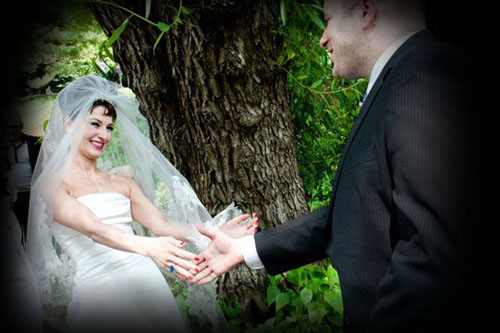
Non-Religious Ceremony
A warm, meaningful ceremony centered on commitment, partnership and the people sharing the moment with you.
Explore This Sample →


Two Traditions, One Shared Commitment
An interfaith ceremony brings together two people—and often two families—with different religious or cultural backgrounds. The goal is not to dilute either tradition or force one to dominate, but to create a balanced ceremony that honors both perspectives while remaining centered on the couple’s shared values.
Begin with a complete ceremony style that reflects your relationship, beliefs and occasion.
A warm, meaningful ceremony centered on commitment, partnership and the people sharing the moment with you.
Explore This Sample →A complete ceremony incorporating Christian faith, scripture and the spiritual meaning of marriage.
Explore This Sample →A thoughtful foundation for honoring two faith traditions while celebrating the commitment the couple shares.
Featured BelowA complete ceremony sample celebrating the couple’s love, equality, commitment and shared future.
Explore This Sample →A ceremony for honoring the life already built together and making meaningful promises for the years ahead.
Explore This Sample →Layer a symbolic ritual, family acknowledgment or remembrance into the ceremony foundation you choose.
Language for joining two lives and families through the lighting of a unity candle.
Explore This Wording →A respectful way to acknowledge loved ones who are deeply missed and still present in the couple’s hearts.
Explore This Wording →Words that recognize the love, example and support parents have contributed to the couple’s lives.
Explore This Wording →A ceremony ritual preserving letters and wine to be opened and shared on a future anniversary.
Explore This Wording →Featured Complete Ceremony
This protected Christian–Jewish sample creates a single ceremony from traditions meaningful to both partners. It includes a chuppah, memorial acknowledgment, marriage prayer, personal vows, Seven Blessings, Kiddush, a unity candle, ring exchange and the breaking of the glass.
Those elements are examples, not requirements. Every interfaith ceremony should begin by identifying which rituals, readings, blessings and family traditions matter most, then arranging them in a clear flow that feels unified rather than divided into competing sections.
A strong interfaith ceremony is balanced, cohesive and understandable. It respects both partners’ backgrounds, acknowledges family expectations with care and focuses on the values the couple shares. Thoughtful transitions help each ritual feel like part of one ceremony rather than a series of disconnected traditions.
Tell us which faiths, rituals, family customs and shared values you want represented.
